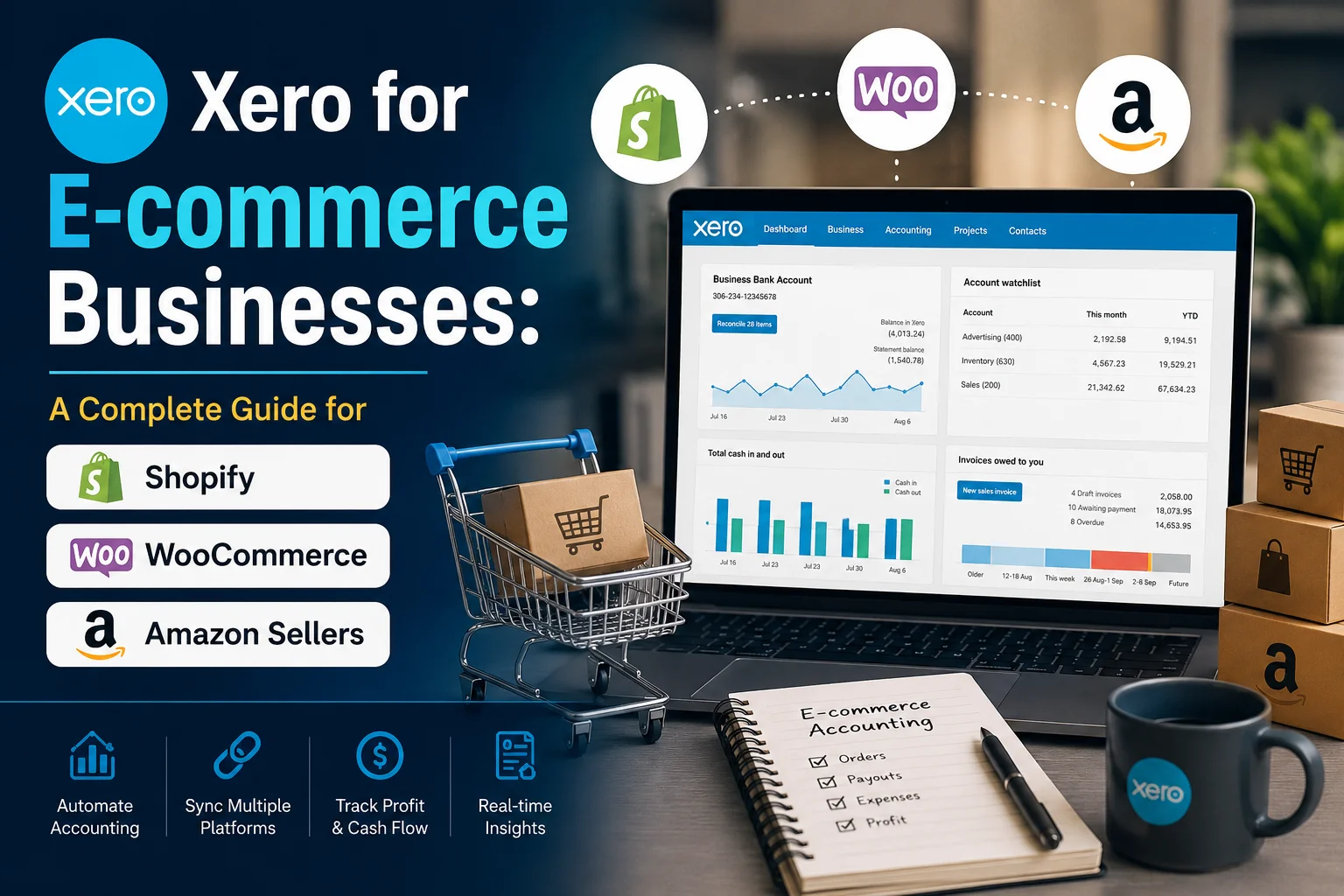
Xero for E-commerce Businesses: A Complete Guide for Shopify, WooCommerce & Amazon Sellers
Running an e-commerce business is about much more than selling products online. Behind every successful store is a well-organized financial system that tracks sales, manages expenses, monitors inventory, reconciles payments, and provides clear insights into profitability.
Whether you sell through Shopify, WooCommerce, Amazon, or multiple online marketplaces, keeping your finances organized becomes increasingly challenging as your business grows. Daily orders, payment processing fees, shipping costs, product returns, supplier invoices, and tax obligations can quickly create a complex accounting workload.
Many online sellers begin by managing finances with spreadsheets or basic bookkeeping tools. While this may work during the early stages, manual accounting becomes time-consuming and increases the likelihood of errors as order volumes increase.
This is where Xero can make a significant difference.
Xero is a cloud-based accounting platform designed to simplify financial management for small and growing businesses. Through automation, bank reconciliation, financial reporting, and integrations with leading e-commerce platforms, Xero helps online businesses spend less time on bookkeeping and more time growing their stores.
In this guide, you’ll learn how Shopify, WooCommerce, and Amazon sellers can use Xero to manage finances more efficiently, improve cash flow, simplify accounting, and make better business decisions.
Why E-commerce Businesses Need Modern Accounting Software
Unlike traditional businesses, online stores often process hundreds or even thousands of transactions each month across multiple sales channels.
A single sale may involve:
- Product revenue
- Shipping charges
- Payment processing fees
- Taxes
- Discounts
- Refunds
- Inventory adjustments
Managing all of these transactions manually quickly becomes difficult.
Without reliable accounting software, business owners often struggle with:
- Tracking actual profits
- Reconciling payment gateways
- Managing supplier bills
- Monitoring cash flow
- Recording inventory purchases
- Preparing financial reports
- Staying organized during tax season
A cloud-based accounting platform helps automate many of these tasks while providing real-time visibility into the financial health of the business.
Why Many Online Sellers Choose Xero
Xero has become one of the most popular accounting platforms for growing online businesses because it combines powerful accounting tools with an intuitive interface.
Business owners can manage their finances from virtually anywhere while reducing manual bookkeeping through automation.
Some of the reasons e-commerce businesses choose Xero include:
- Cloud-based accounting
- Automated bank reconciliation
- Professional invoicing
- Expense tracking
- Financial reporting
- Inventory support
- Multi-user collaboration
- Large integration ecosystem
- Scalable features for business growth
Whether you operate a single Shopify store or sell across several marketplaces, Xero provides a centralized platform for managing business finances.
Managing Sales from Shopify
Shopify has become one of the world’s most popular e-commerce platforms, helping businesses sell products online through customizable storefronts.
As sales increase, accounting becomes more complex.
Business owners must track:
- Product sales
- Shipping income
- Payment processor fees
- Refunds
- Taxes
- Customer payments
Instead of manually recording these transactions, many businesses connect Shopify with Xero using compatible integrations. This can help transfer sales data into Xero, reducing repetitive data entry and improving the accuracy of financial records.
With a streamlined workflow, store owners can spend less time on bookkeeping and more time serving customers and growing their business.
Managing WooCommerce Accounting
WooCommerce offers flexibility and customization for WordPress users, but financial management can become more challenging as order volumes increase.
WooCommerce businesses often need to track:
- Customer orders
- Sales revenue
- Shipping costs
- Refunds
- Payment gateway transactions
- Supplier expenses
By using Xero as the accounting system, business owners can maintain organized financial records while generating reports that provide a clearer picture of business performance.
This approach also supports better financial planning as the business expands.
Managing Amazon Seller Finances
Amazon sellers often face unique accounting challenges.
Marketplace fees, fulfillment costs, advertising expenses, returns, and settlement reports all contribute to a more complex bookkeeping process.
Using Xero allows Amazon sellers to organize financial data more efficiently and maintain accurate records of business income and expenses.
Combined with suitable integration tools, Xero can help simplify reconciliation and reduce the amount of manual work required to keep accounts up to date.
This is especially valuable for businesses processing large numbers of orders every month.
Keeping Track of Business Expenses
Every online business has operating expenses beyond purchasing inventory.
Common expenses include:
- Advertising campaigns
- Product photography
- Website hosting
- Software subscriptions
- Shipping supplies
- Packaging materials
- Office equipment
- Internet services
- Contractor payments
Recording these expenses accurately is essential for understanding profitability.
Xero allows business owners to categorize expenses, attach receipts, and review spending through detailed financial reports.
This makes it easier to identify unnecessary costs and improve budgeting.
Monitoring Cash Flow
Revenue alone doesn’t tell the full story of an e-commerce business.
A store may generate impressive sales while still experiencing cash flow challenges due to inventory purchases, advertising expenses, delayed payment settlements, or seasonal fluctuations.
Xero provides real-time visibility into:
- Available cash
- Outstanding supplier bills
- Customer payments
- Bank balances
- Business expenses
Having access to current financial information allows store owners to make smarter purchasing and investment decisions.
Simplifying Bank Reconciliation
Reconciling bank transactions manually can take hours every month.
Xero simplifies this process by automatically importing transactions from supported financial institutions and suggesting matches with recorded business activity.
Instead of reviewing every transaction manually, business owners can approve suggested matches and maintain accurate financial records with far less effort.
Regular reconciliation helps ensure:
- Accurate account balances
- Better financial reporting
- Reduced bookkeeping errors
- Faster month-end closing
This automation is especially valuable for businesses processing a high volume of daily transactions.
Creating Professional Financial Reports
Understanding business performance requires more than simply reviewing sales numbers.
Xero provides a range of financial reports that help online sellers evaluate profitability and make informed decisions.
Some of the most useful reports include:
- Profit and Loss Statement
- Balance Sheet
- Cash Flow Report
- Expense Summary
- Accounts Receivable Report
- Budget Reports
These reports help answer important questions such as:
- Which products generate the highest profits?
- Are advertising costs increasing too quickly?
- How healthy is business cash flow?
- Is the business growing sustainably?
- Can additional inventory be purchased confidently?
Access to accurate financial reports allows business owners to make decisions based on data rather than assumptions.
Managing Inventory More Effectively
Inventory is one of the largest investments for most e-commerce businesses.
Running out of stock can result in lost sales, while overstocking ties up valuable cash that could be used elsewhere.
Xero includes basic inventory tracking features that help businesses monitor products, costs, and sales. Companies with more advanced inventory requirements can also connect Xero to specialized inventory management solutions through its integration ecosystem.
Having organized inventory records helps improve purchasing decisions and supports healthier cash flow management.
Connecting Xero with Your E-commerce Tools
Most successful online stores rely on several software platforms to manage sales, payments, shipping, inventory, and customer relationships. Entering the same financial information into multiple systems wastes time and increases the risk of errors.
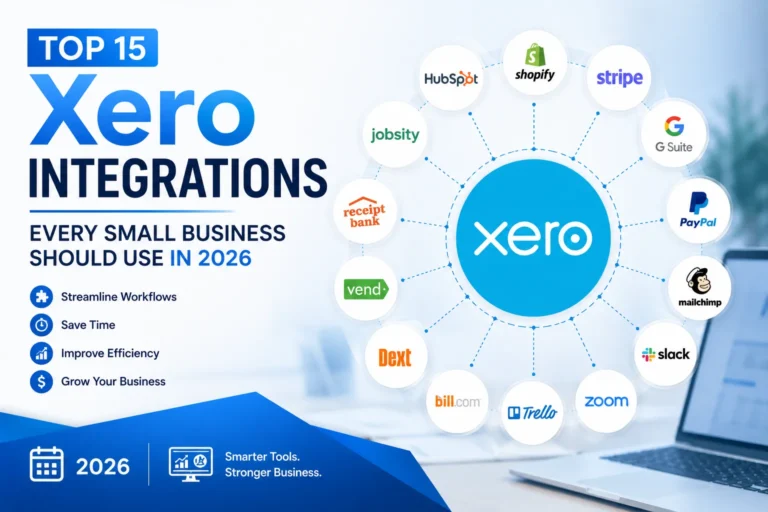
One of Xero’s biggest strengths is its ability to connect with a wide range of e-commerce applications through integrations.
These integrations can help automate the flow of sales and financial data between your online store and your accounting system, reducing manual bookkeeping and improving accuracy.
Popular integrations include:
Shopify
Automatically sync sales, payments, taxes, and customer information to streamline bookkeeping.
WooCommerce
Transfer order and payment data into Xero, making financial records easier to maintain.
Amazon Seller Tools
Many third-party connectors help Amazon sellers import settlement reports, fees, refunds, and sales data into Xero.
Stripe
Automatically record online payments and simplify reconciliation.
PayPal
Track customer payments, transaction fees, and refunds in one place.
Wise Business
A useful option for businesses that receive payments from international customers or suppliers.
Zapier
Connect Xero with thousands of other business applications to automate repetitive workflows.
Choosing the right integrations depends on your business model, but automating data transfers can significantly reduce bookkeeping time.
Managing Supplier Bills
Every e-commerce business purchases products, packaging materials, shipping supplies, and business services from suppliers.
As the business grows, managing supplier invoices manually becomes increasingly difficult.
Xero allows you to:
- Record supplier invoices
- Monitor payment due dates
- Track outstanding bills
- Store digital copies of invoices
- Maintain complete payment records
Having organized supplier information helps improve cash flow planning and reduces the risk of late payments.
Preparing for Tax Season
Tax preparation is often one of the most stressful parts of running an online business.
Sales from multiple platforms, payment processor fees, inventory purchases, shipping costs, and business expenses all need to be recorded accurately throughout the year.
Using Xero helps keep your financial records organized, making it easier to prepare for tax reporting.
Benefits include:
- Organized income records
- Categorized business expenses
- Digital receipt storage
- Accurate financial reports
- Easier collaboration with accountants
While tax rules vary depending on your country and business structure, maintaining accurate bookkeeping throughout the year can save significant time and reduce the likelihood of mistakes.
Managing Multi-Currency Transactions
Many e-commerce businesses sell products to customers around the world.
International sales introduce additional accounting challenges, including different currencies, payment methods, and exchange rates.
For businesses that operate globally, Xero offers multi-currency capabilities on eligible plans. This allows you to record and manage transactions in supported foreign currencies while keeping your financial records organized.
If your store regularly buys products from overseas suppliers or sells internationally, this feature can simplify financial management and provide better visibility into your global operations.
Working with Your Accountant
Most growing e-commerce businesses eventually work with a professional accountant or bookkeeper.
Rather than sending spreadsheets back and forth, Xero allows your accountant to access your financial information directly with appropriate permissions.
This approach offers several benefits:
- Faster financial reviews
- More accurate bookkeeping
- Easier tax preparation
- Better year-end reporting
- Reduced administrative work
Because everyone works from the same cloud-based data, there is less duplication of effort and fewer opportunities for mistakes.
Automation That Saves Valuable Time
Online businesses generate a large number of financial transactions every day.
Automation helps reduce repetitive bookkeeping tasks so you can focus on growing your store.
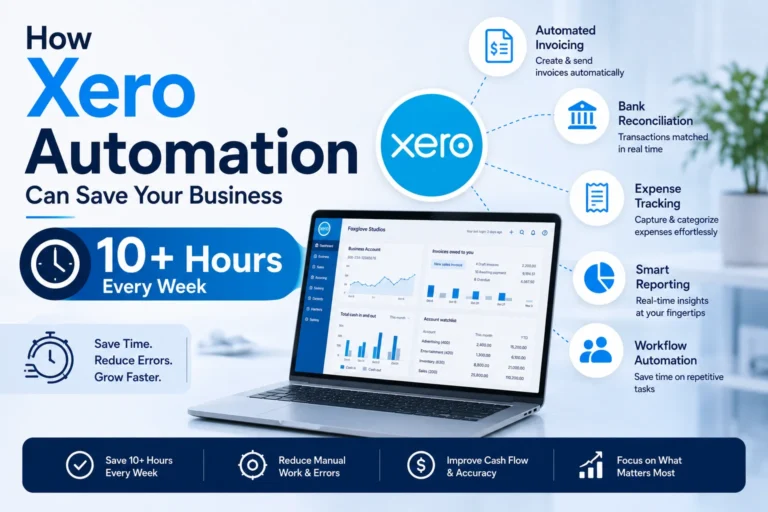
Some of Xero’s most valuable automation features include:
- Automatic bank feeds
- Bank rules for recurring transactions
- Recurring invoices
- Payment reminders
- Automated reconciliation suggestions
- Scheduled financial reports
For busy store owners, these features can save several hours every week while improving the accuracy of financial records.
Advantages of Using Xero for E-commerce Businesses
Xero offers several benefits that make it a strong choice for online sellers.
Easy-to-Use Interface
The dashboard is clean and organized, making it easier for business owners to manage finances without extensive accounting knowledge.
Cloud-Based Access
Access your financial information from virtually anywhere using an internet connection.
Automated Bookkeeping
Reduce manual work with bank feeds, reconciliation tools, and recurring transactions.
Excellent Financial Reporting
Understand revenue, expenses, and profitability through detailed reports.
Strong Integration Ecosystem
Connect Xero with Shopify, WooCommerce, Amazon tools, payment gateways, inventory systems, and many other business applications.
Scalable Platform
Whether you’re processing a few orders each week or thousands every month, Xero can support your growing business.
Potential Limitations
Although Xero is an excellent accounting solution, every business has unique requirements.
Businesses with advanced inventory management needs, warehouse operations, or complex manufacturing processes may require specialized inventory software alongside Xero.
Similarly, Amazon sellers with large product catalogs often benefit from dedicated marketplace integration tools that work together with Xero.
For most small and medium-sized e-commerce businesses, however, Xero provides an excellent foundation for financial management.
Best Practices for Online Sellers Using Xero
To get the most value from Xero, consider following these best practices:
- Reconcile your bank accounts regularly.
- Record supplier bills as soon as they are received.
- Keep digital copies of receipts and invoices.
- Review your Profit and Loss report every month.
- Monitor advertising expenses closely.
- Compare inventory purchases with sales performance.
- Review cash flow before placing large inventory orders.
- Work with your accountant when setting up your chart of accounts and tax settings.
Consistent financial management helps improve business decisions and supports sustainable growth.
Frequently Asked Questions
Is Xero good for Shopify stores?
Yes. Xero works well for Shopify businesses, particularly when connected through compatible integrations that automate the transfer of sales and payment information.
Can Amazon sellers use Xero?
Yes. Many Amazon sellers use Xero to manage bookkeeping, financial reporting, expenses, and bank reconciliation. Third-party connectors can help import Amazon settlement data into Xero.
Does Xero support WooCommerce?
Yes. WooCommerce store owners can connect their stores to Xero using supported integrations, reducing manual accounting work.
Can Xero manage inventory?
Xero includes basic inventory tracking features. Businesses with more advanced inventory requirements can connect dedicated inventory management solutions through integrations.
Is Xero suitable for growing e-commerce businesses?
Absolutely. Xero’s cloud-based platform, automation features, reporting tools, and integration ecosystem make it suitable for businesses that expect to grow over time.
Final Thoughts
Managing an e-commerce business involves much more than processing orders and shipping products. Success depends on maintaining accurate financial records, understanding profitability, monitoring cash flow, and making informed business decisions based on reliable data.
Xero provides a practical accounting solution by bringing invoicing, expense tracking, bank reconciliation, financial reporting, and automation together in one cloud-based platform. Its ability to connect with popular e-commerce platforms and payment providers makes it especially valuable for businesses selling through Shopify, WooCommerce, Amazon, and other online marketplaces.
As your business grows, the amount of financial information you manage will increase. Investing in a reliable accounting system early can help reduce manual work, improve financial visibility, and support long-term growth.
Whether you’re launching your first online store or managing an established e-commerce brand, Xero offers the flexibility and tools needed to simplify accounting while giving you more time to focus on serving customers and expanding your business.
Ready to Simplify Your E-commerce Accounting?
If you’re looking for an accounting platform that helps organize your finances, automate repetitive tasks, and provide clear insights into your business performance, Xero is a strong choice.
Explore its features, connect it with your preferred e-commerce platform, and build a financial system that grows alongside your online business.