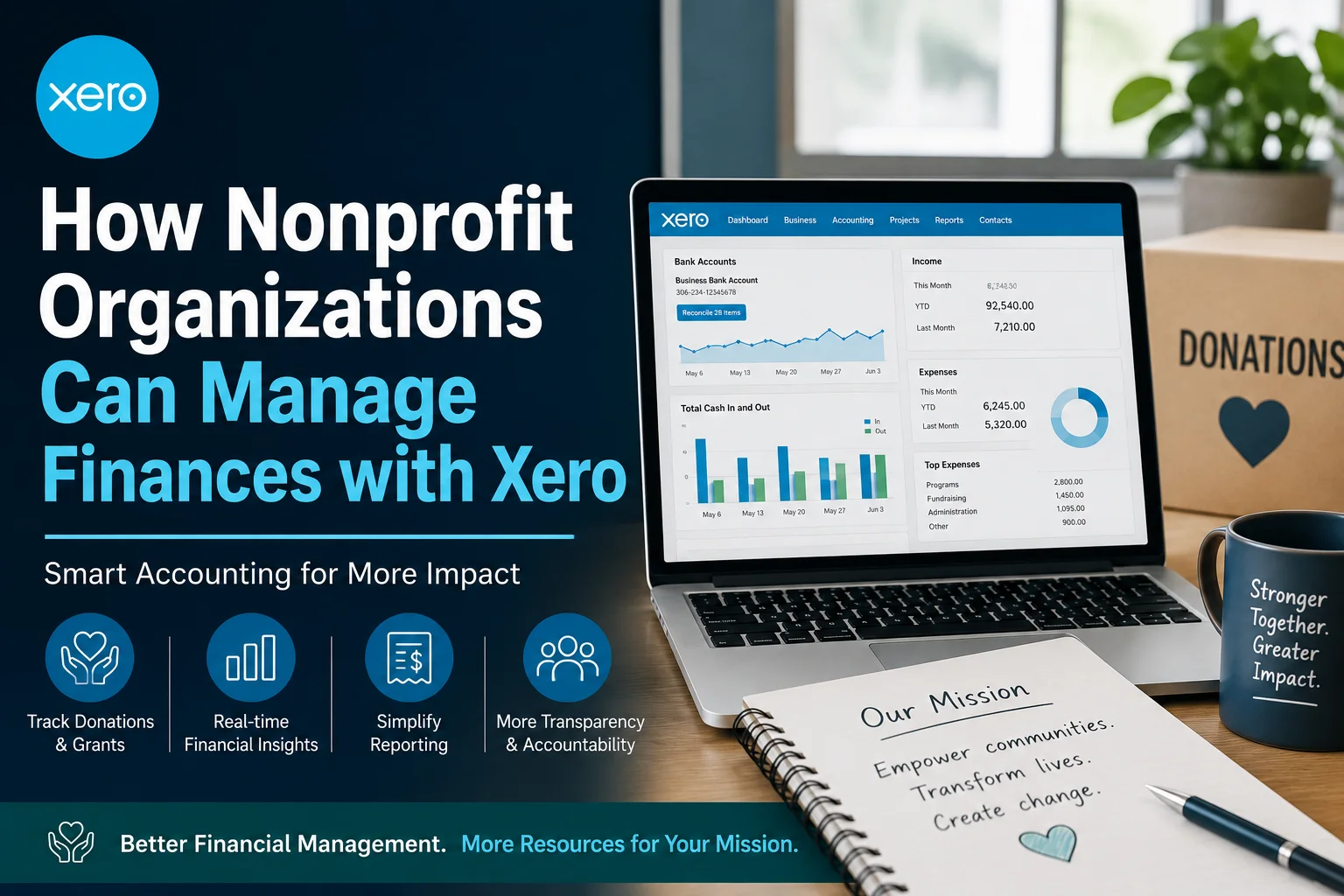
How Nonprofit Organizations Can Manage Finances with Xero
Managing finances is one of the biggest responsibilities for any nonprofit organization. Unlike traditional businesses, nonprofits must not only keep accurate financial records but also demonstrate transparency to donors, grant providers, board members, and regulatory authorities. Every donation received, every grant awarded, and every expense incurred needs to be tracked carefully to ensure funds are used for their intended purpose.
For many nonprofits, spreadsheets may work during the early stages. However, as the organization grows, managing finances manually becomes increasingly difficult. Multiple funding sources, recurring donations, payroll, volunteer reimbursements, vendor payments, and financial reporting quickly become time-consuming tasks that are prone to human error.
This is where cloud accounting software like Xero can make a significant difference.
Xero is designed to simplify financial management through automation, real-time reporting, and seamless collaboration. While it serves businesses across many industries, its flexible accounting features also make it an excellent choice for nonprofit organizations that need an affordable and reliable way to manage their finances.
In this guide, we’ll explore how nonprofit organizations can use Xero to improve financial management, streamline daily accounting tasks, and maintain transparency with donors and stakeholders.
Why Financial Management Is Critical for Nonprofit Organizations
Every nonprofit exists to achieve a mission rather than generate profits. Whether the organization focuses on education, healthcare, environmental conservation, community development, or humanitarian work, financial accountability plays a vital role in building trust.
Poor financial management can lead to:
- Difficulty tracking donations and grants
- Delayed financial reporting
- Budget overruns
- Compliance issues
- Loss of donor confidence
- Inefficient use of resources
On the other hand, strong financial management helps nonprofits:
- Make informed decisions
- Allocate funds effectively
- Meet reporting requirements
- Build donor trust
- Plan for long-term sustainability
Using modern accounting software like Xero allows organizations to spend less time on administrative tasks and more time focusing on their mission.
What Is Xero?
Xero is a cloud-based accounting platform that helps organizations manage bookkeeping, invoicing, expenses, bank reconciliation, financial reporting, and cash flow from a single dashboard.
Because Xero operates entirely online, authorized users can securely access financial data from anywhere with an internet connection. This makes it especially useful for nonprofits with remote staff, distributed teams, or multiple office locations.
Some of Xero’s key capabilities include:
- Bank account synchronization
- Automated transaction reconciliation
- Invoice and bill management
- Expense tracking
- Financial reporting
- Budget monitoring
- Multi-user collaboration
- Integration with hundreds of business applications
Its user-friendly interface also makes it accessible to nonprofit staff and volunteers who may not have extensive accounting experience.
Why Nonprofits Choose Xero
Many nonprofit organizations choose Xero because it combines ease of use with powerful financial management features.
Unlike complex enterprise accounting systems that require extensive training, Xero offers a straightforward experience while still providing the tools needed to maintain accurate financial records.
Some of the biggest advantages include:
- Cloud-based access
- Automated bookkeeping
- Real-time financial reporting
- Secure collaboration with accountants
- Scalable features for growing organizations
- Integration with fundraising and payment platforms
For nonprofits operating with limited administrative resources, automation alone can save several hours each week.
Managing Donations Effectively
Donations are the lifeblood of most nonprofit organizations. Whether contributions come from individuals, businesses, or fundraising campaigns, recording them accurately is essential.
With Xero, organizations can record donations as income, organize transactions using appropriate account categories, and monitor incoming funds through connected bank feeds.
This provides a clear record of:
- Individual donations
- Corporate sponsorships
- Membership contributions
- Fundraising event income
- Online donations
Maintaining organized donation records helps improve transparency and simplifies year-end reporting.
Tracking Grants and Restricted Funding
Many nonprofits receive grants that must be used for specific projects or programs.
Managing restricted funding manually can quickly become complicated, particularly when multiple grants are active at the same time.
Using Xero’s tracking categories and reporting tools, organizations can separate financial activity by project, funding source, or department.
For example, a nonprofit may receive:
- An education grant
- A healthcare grant
- A community outreach grant
Each funding source can be monitored independently, making it easier to demonstrate how grant money has been spent and prepare reports for funding organizations.
This level of visibility supports better accountability and reduces the risk of reporting errors.
Simplifying Everyday Bookkeeping
Manual bookkeeping often consumes valuable time that nonprofit staff could otherwise dedicate to serving their communities.
Xero automates many routine accounting tasks, including:
- Importing bank transactions
- Matching payments with records
- Categorizing recurring expenses
- Reconciling accounts
- Recording supplier bills
Instead of entering each transaction individually, organizations can review and approve imported transactions, dramatically reducing administrative workload.
This not only saves time but also minimizes the likelihood of data entry errors.
Monitoring Expenses
Nonprofits often manage a wide range of operational expenses, such as:
- Office supplies
- Program costs
- Utilities
- Staff salaries
- Volunteer reimbursements
- Marketing expenses
- Travel costs
- Equipment purchases
Xero makes it easy to record, categorize, and review these expenses in one centralized location.
Having accurate expense data enables leadership teams to understand where resources are being used and identify opportunities to reduce unnecessary spending.
Budget Management for Programs
Budgeting is critical for nonprofit organizations because every dollar should support the organization’s mission.
Xero allows organizations to compare actual income and expenses against planned budgets throughout the year.
This helps management answer important questions such as:
- Are fundraising goals being met?
- Is a particular program exceeding its budget?
- Which activities require additional funding?
- Can resources be reallocated more effectively?
Regular budget reviews allow organizations to make informed decisions before small financial issues become larger problems.
Real-Time Bank Reconciliation
Reconciling bank accounts manually can be one of the most time-consuming accounting tasks.
Xero simplifies this process by automatically importing transactions from supported bank accounts and suggesting matches based on existing financial records.
Rather than comparing statements line by line, finance staff can approve suggested matches quickly and confidently.
Frequent reconciliation helps ensure that:
- Account balances remain accurate
- Duplicate entries are avoided
- Missing transactions are identified promptly
- Financial reports reflect current information
Maintaining accurate bank records is essential for preparing board reports, annual financial statements, and audits.
Creating Professional Financial Reports
One of the most valuable features of Xero is its reporting capability.
Nonprofit leaders, board members, and donors often require clear financial information to evaluate the organization’s performance and financial health.
Xero provides a range of reports, including:
- Profit and Loss Statement
- Balance Sheet
- Cash Flow Report
- Budget Variance Report
- Expense Summary
- Account Transaction Reports
These reports can help organizations communicate financial performance clearly while supporting better strategic planning.
Rather than spending hours preparing spreadsheets manually, staff can generate up-to-date reports whenever they are needed.
Collaborating with Accountants, Treasurers, and Board Members
Most nonprofit organizations involve multiple people in financial oversight. While staff may handle day-to-day bookkeeping, board members, finance committees, treasurers, and external accountants often need access to financial information.
One of Xero’s biggest advantages is that it allows multiple users to work within the same organization while assigning different permission levels. This means team members can access only the information relevant to their role, improving both security and collaboration.
Instead of exchanging spreadsheets or emailing financial files, everyone works from the same up-to-date financial data. This reduces confusion, minimizes version control issues, and helps ensure that decisions are based on accurate information.
For organizations with volunteer treasurers or external accounting firms, this centralized approach makes financial management much more efficient.
Managing Multiple Programs and Projects
Many nonprofits run several programs at the same time. For example, an organization may operate:
- Community outreach initiatives
- Educational workshops
- Healthcare campaigns
- Environmental conservation projects
- Emergency relief programs
Each program typically has its own budget, funding source, and reporting requirements.
Xero’s tracking categories make it easier to organize transactions by project or program. Income and expenses can be assigned to specific activities, allowing organizations to see exactly how resources are being used.
This helps answer questions such as:
- Which programs are operating within budget?
- Which projects require additional funding?
- How much has been spent from each grant?
- Which initiatives generate the greatest community impact?
Having this level of visibility supports better financial planning and demonstrates accountability to donors and funding organizations.
Managing Bills and Supplier Payments
Nonprofits regularly work with suppliers, landlords, contractors, and service providers. Keeping track of invoices manually can become difficult, especially when several payments are due at the same time.
Xero helps simplify accounts payable by allowing organizations to:
- Record supplier invoices
- Schedule payment due dates
- Monitor outstanding bills
- Keep a complete payment history
This reduces the likelihood of late payments while improving cash flow management.
Organizations can also attach digital copies of invoices and receipts, creating a secure and organized financial record that is easy to review during audits.
Cash Flow Management
Even financially healthy nonprofits can experience cash flow challenges.
Grants may arrive months after applications are approved, fundraising campaigns may generate seasonal income, and unexpected expenses can arise at any time.
Monitoring cash flow regularly helps organizations prepare for these situations.
Xero provides real-time visibility into:
- Current bank balances
- Outstanding invoices
- Upcoming bills
- Expected payments
- Overall cash position
With accurate financial information available at any time, nonprofit leaders can make informed decisions before cash shortages become serious problems.
Integrating Xero with Other Nonprofit Tools
Most nonprofits use more than one software platform. Alongside accounting software, organizations often rely on tools for fundraising, payment processing, donor management, payroll, or event registration.
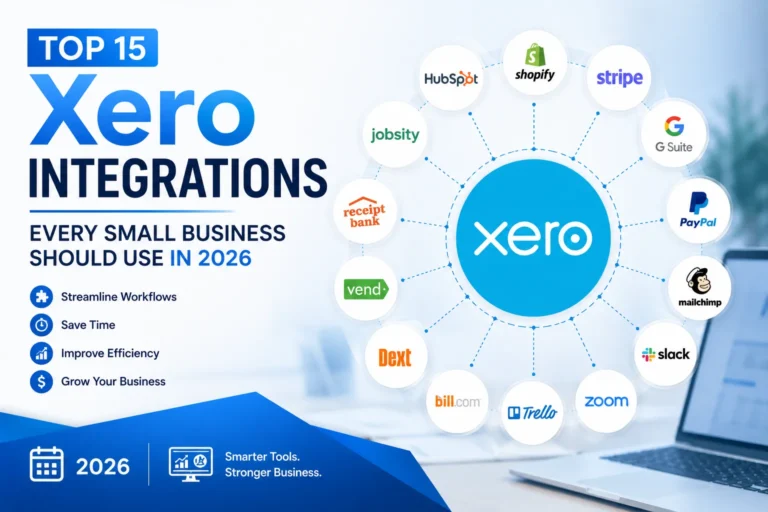
One of Xero’s strengths is its ability to connect with a wide range of third-party applications through integrations. Depending on your organization’s needs, Xero can work alongside payment gateways, CRM systems, payroll solutions, expense management tools, and reporting platforms.
These integrations help reduce duplicate data entry, improve accuracy, and ensure that financial information stays synchronized across different systems.
Before connecting any application, it’s a good idea to confirm that it meets your organization’s security, reporting, and compliance requirements.
Payroll and Staff Expense Management
Many nonprofits employ full-time staff while also reimbursing volunteers for approved expenses.
Keeping payroll records organized is essential for maintaining accurate financial statements.
Xero supports payroll workflows in some regions and also integrates with payroll providers where direct payroll isn’t included.
Organizations can also use Xero to:
- Record staff reimbursements
- Track travel expenses
- Monitor employee-related costs
- Maintain supporting documentation
Having all employment-related expenses recorded within one accounting system improves reporting accuracy and simplifies year-end financial preparation.
Strengthening Internal Financial Controls
Strong financial controls are essential for every nonprofit, regardless of its size.
Proper controls help reduce errors, prevent unauthorized transactions, and improve accountability.
Using Xero alongside good financial policies can support practices such as:
- Separating financial responsibilities among team members
- Reviewing bank reconciliations regularly
- Approving expenses before payment
- Limiting user access based on responsibilities
- Maintaining digital copies of receipts and invoices
Although accounting software cannot replace internal governance, it provides the tools needed to support transparent financial management.
Advantages of Using Xero for Nonprofit Organizations
Many nonprofits choose Xero because it combines powerful accounting features with ease of use.
Some of its key advantages include:
Easy-to-Use Interface
Staff and volunteers can learn the platform quickly, even without extensive accounting experience.
Cloud-Based Access
Authorized users can securely access financial information from virtually anywhere.
Automated Bookkeeping
Bank feeds, reconciliation tools, and recurring transactions reduce manual work.
Excellent Reporting
Generate financial reports whenever they are needed for management meetings or board presentations.
Scalable Platform
Whether managing a small community organization or a growing nonprofit, Xero can adapt as financial needs become more complex.
Collaboration
Accountants, finance committees, and leadership teams can work together using real-time financial data.
Potential Limitations
While Xero is a strong accounting solution, every organization should evaluate whether it aligns with its specific needs.
Some nonprofits may require:
- Highly specialized fund accounting
- Complex grant management systems
- Advanced donor relationship management
- Industry-specific compliance features
In these cases, additional software or integrations may be beneficial.
For many small and medium-sized nonprofits, however, Xero provides an excellent balance of functionality, simplicity, and value.
Best Practices for Using Xero in a Nonprofit
To get the most value from Xero, organizations should establish consistent financial processes.
Some recommended practices include:
- Reconcile bank accounts every week.
- Record donations as they are received.
- Review budgets monthly.
- Track grants separately using categories or projects.
- Attach receipts and supporting documents to transactions.
- Review financial reports before every board meeting.
- Back up important financial records where appropriate.
- Work closely with your accountant when configuring your chart of accounts and reporting structure.
Following these habits helps maintain accurate records and reduces problems during audits or annual reporting.
Frequently Asked Questions
Is Xero suitable for nonprofit organizations?
Yes. Xero is well suited to many nonprofits, particularly small and medium-sized organizations that need cloud-based accounting, automation, financial reporting, and collaboration tools.
Can Xero track donations?
Yes. Donations can be recorded and categorized within Xero, allowing organizations to maintain clear financial records and prepare accurate reports.
Can nonprofits manage grants in Xero?
Yes. By using tracking categories or projects, organizations can monitor income and expenses related to individual grants or programs.
Is Xero easy for nonprofit staff to learn?
Many users find Xero’s interface intuitive, making it accessible even for staff members with limited accounting experience.
Can accountants access our Xero account?
Yes. Organizations can invite accountants and assign appropriate permission levels, allowing them to review financial information without sharing files manually.
Final Thoughts
Effective financial management allows nonprofit organizations to focus on what matters most—creating positive change in their communities. As organizations grow, manual bookkeeping methods often become inefficient and increase the risk of errors, making it more difficult to maintain transparency with donors, grant providers, and governing boards.
Xero offers a practical solution by bringing bookkeeping, expense tracking, reporting, bank reconciliation, budgeting, and financial collaboration together in one cloud-based platform. Its automation features help reduce repetitive administrative work, while its reporting tools provide the financial visibility needed to support informed decision-making.
Although every nonprofit has unique requirements, Xero provides a flexible and scalable accounting solution that meets the needs of many charities, foundations, community organizations, and social enterprises.
If your nonprofit is looking to replace spreadsheets, improve financial accuracy, and simplify day-to-day accounting, Xero is well worth considering. With the right setup and financial processes in place, it can help your organization spend less time managing finances and more time advancing its mission.