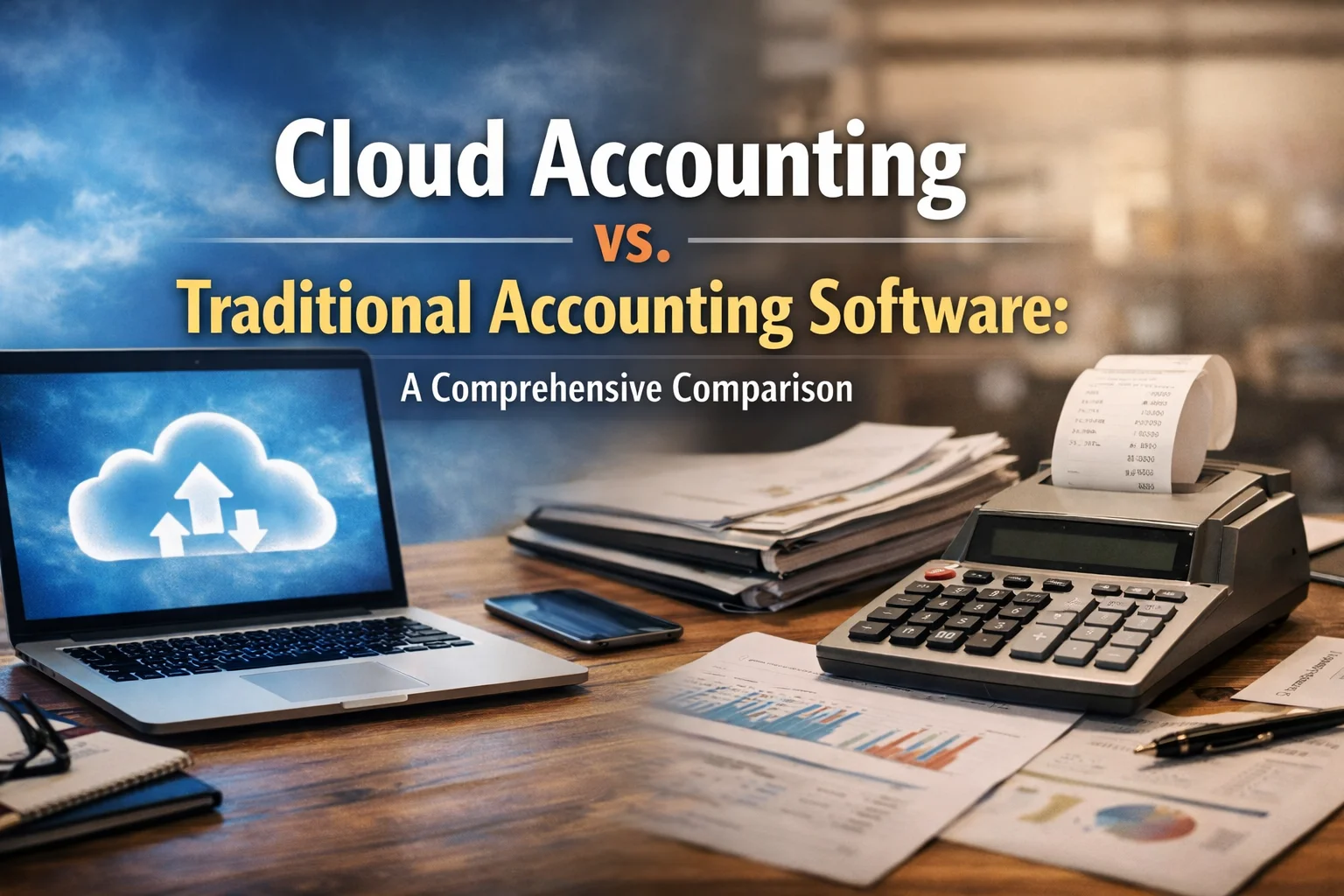
Cloud Accounting vs. Traditional Accounting Software: A Comprehensive Comparison
Introduction
In today’s rapidly evolving business landscape, choosing the right accounting software is crucial for financial management and overall success. Businesses face a critical decision: should they embrace the flexibility and accessibility of cloud accounting or stick with the tried-and-true methods of traditional accounting software? This blog post will delve into a comprehensive comparison of cloud accounting and traditional accounting software, highlighting their key differences, advantages, and disadvantages to help you make an informed decision for your business.
What is Traditional Accounting Software?
Traditional accounting software, also known as desktop accounting software, is installed directly onto a computer or server. Data is stored locally, and access is typically limited to users within the same physical location.
Key Characteristics of Traditional Accounting Software:
- On-Premise Installation: Software is installed and runs on a local computer or server.
- Local Data Storage: Financial data is stored on the computer or server where the software is installed.
- Limited Accessibility: Access is usually restricted to users on the same network.
- Upfront Licensing Fees: Typically involves a one-time purchase of a software license.
- Manual Updates: Software updates and maintenance are often performed manually.
What is Cloud Accounting Software?
Cloud accounting software, on the other hand, is hosted on remote servers and accessed via the internet. This means users can access their financial data from anywhere with an internet connection.
Key Characteristics of Cloud Accounting Software:
- Remote Hosting: Software and data are hosted on the vendor’s servers.
- Online Accessibility: Accessible from any device with an internet connection.
- Subscription-Based Pricing: Typically involves a monthly or annual subscription fee.
- Automatic Updates: Software updates and maintenance are usually handled by the vendor.
- Enhanced Collaboration: Facilitates real-time collaboration among users.
Key Differences Between Cloud and Traditional Accounting Software
Table
| Feature | Traditional Accounting Software | Cloud Accounting Software |
|---|---|---|
| Deployment | On-Premise | Cloud-Based |
| Accessibility | Limited to local network | Accessible from anywhere |
| Data Storage | Local server/computer | Vendor’s servers |
| Pricing | Upfront license fee | Subscription-based |
| Updates | Manual | Automatic |
| Collaboration | Limited | Enhanced |
| Security | Dependent on internal IT | Vendor-managed |
Advantages and Disadvantages
Traditional Accounting Software:
Advantages:
- Greater Control: Businesses have direct control over their data and software.
- Security: Can be perceived as more secure by some, as data is stored locally.
Disadvantages: - Higher Upfront Costs: Requires a significant initial investment in software licenses.
- Limited Accessibility: Restricts access to users within the local network.
- Maintenance and Updates: Requires internal IT resources for maintenance and updates.
- Lack of Scalability: Scaling can be complex and expensive.
Cloud Accounting Software:
Advantages:
- Lower Upfront Costs: Subscription-based pricing reduces initial investment.
- Accessibility and Flexibility: Access data from anywhere with an internet connection.
- Automatic Updates: Software updates are handled by the vendor, reducing IT burden.
- Scalability: Easily scale up or down as business needs change.
- Collaboration: Facilitates real-time collaboration among users.
Disadvantages: - Internet Dependency: Requires a stable internet connection.
- Security Concerns: Data is stored on vendor’s servers, raising potential security concerns.
- Subscription Costs: Ongoing subscription fees can add up over time.
- Less Control: Businesses have less direct control over their data and software.
Making the Right Choice for Your Business
The choice between cloud accounting and traditional accounting software depends on your business’s specific needs and priorities. Consider the following factors:
- Budget: Cloud accounting typically has lower upfront costs, while traditional accounting may have higher initial expenses.
- Accessibility: If you need to access your financial data from multiple locations, cloud accounting is the better choice.
- IT Resources: If you have limited IT resources, cloud accounting can reduce the burden of maintenance and updates.
- Security: Evaluate the security measures offered by both cloud and traditional accounting providers.
- Scalability: If you anticipate significant growth, cloud accounting offers greater scalability.
Conclusion
Both cloud accounting and traditional accounting software have their own advantages and disadvantages. Cloud accounting offers greater flexibility, accessibility, and scalability, while traditional accounting provides greater control and potentially enhanced security. By carefully considering your business’s specific needs and priorities, you can choose the accounting software that best supports your financial management and overall success.